Media Buying Maxxing / The answers
Event media buying.
Good questions.
Straight answers.
How to turn attention into ticket sales—and tell whether the advertising is actually doing its job. Strategy, spend and measurement, grounded in our event campaign work.
01 /
Strategy & the ticket goal
Start with the room you need to fill. Not the impressions you could buy.
What is media buying for events?
Media buying for events is the planning, purchase and optimization of paid advertising to reach likely attendees and drive ticket sales or registrations. It connects audience selection, advertising platforms, creative, budget and purchase measurement around a fixed event deadline.
At Media Buying Maxxing, we build the campaign around the ticket goal, then use sales signals to decide what to test, keep and change. Reach and clicks help diagnose the journey; they are not the final result.
Explore our event advertising serviceHow is event advertising different from e-commerce advertising?
An event has a deadline, finite capacity and a location that affects who can realistically attend. Unsold tickets cannot be carried into the next week once the event is over. Artist recognition, travel, competing plans and ticket-price stages can all change demand.
That makes pacing essential: build demand before the deadline, watch purchase velocity and adjust while there is still time to act. A strong final week does not mean the earlier campaign was unnecessary.
Is boosting an Instagram post enough to sell event tickets?
Boosting a post can distribute an announcement, but it is not a complete ticket-selling strategy. The important question is what the campaign is optimized to achieve and whether purchases can be measured—not whether the post gets likes.
A structured campaign gives you clearer audience tests, budget controls, creative comparisons and conversion reporting. If purchase tracking is unavailable, use an honest interim metric and reconcile it with actual ticket sales rather than calling engagement revenue.
What kinds of events does Media Buying Maxxing have experience with?
Our published case studies cover music events featuring Hot Since '82, Lee Burridge, Claptone and Hugel, plus ongoing work across Cyclic's event calendar. They show different challenges: multi-city demand, first-time accounts, early sales and audiences that build across events.
For a different format, such as a conference or festival, the useful starting point is its audience, location, ticket economics and conversion journey. Music-event results should not be treated as a forecast for every event category.
Read the event case studiesCan paid advertising guarantee a sold-out event?
No. Paid advertising cannot guarantee a sell-out. Demand, lineup, pricing, capacity, location, competition and the ticketing experience all affect the outcome.
A responsible media buyer sets a measurable target, explains the assumptions, monitors progress and flags when the sales trajectory is not supporting the plan. We use documented results as evidence of our approach, not promises of identical returns.
02 /
Timing & budget
The right budget has a job. The right timing gives it a chance.
When should I start advertising my event?
Start when the ticket offer, event assets and purchase journey are ready—not at a universal number of weeks before the event. A new brand or unfamiliar lineup needs more room to build recognition than a recurring event with an established audience.
Plan around announcement, on-sale, ticket-tier changes and the final sales period. Our Claptone case study recorded 33% of ticket purchases in the first two and a half weeks: in that campaign, the opening period mattered.
See how the Claptone launch performedHow much should I spend on advertising an event?
Build the budget from your remaining ticket target, the contribution available per ticket and a realistic acquisition-cost range. There is no reliable universal percentage of event revenue that every organiser should spend.
A planning estimate is remaining paid-ad ticket target × assumed cost per ticket purchase. For example, 200 purchases at an assumed €8 acquisition cost implies €1,600 in media spend. This is an illustration, not a benchmark or a quote; fees, ticket margin and sales from other channels must be considered separately.
Start with a test you can afford, then update the assumptions using actual sales. A small budget should concentrate learning, not be split across every platform.
Should I save most of the advertising budget for the final week?
Not by default. Late purchases are common in some event campaigns, but earlier advertising may be what built the awareness and eligible remarketing audience behind them. Saving everything for the end removes time to learn and correct mistakes.
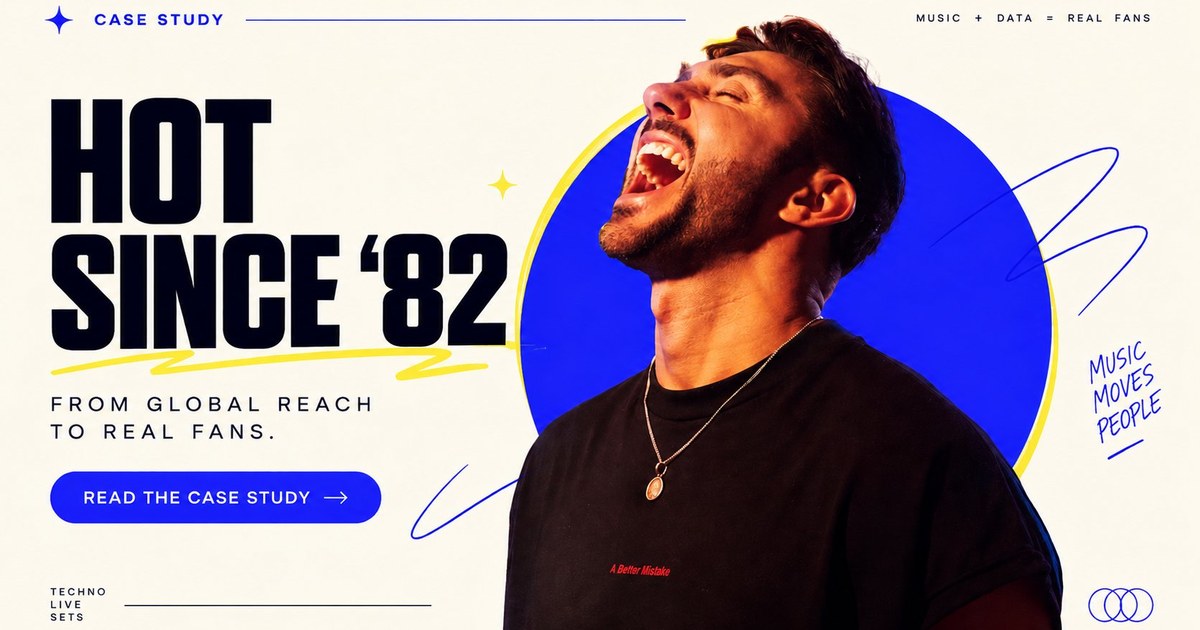
In the Hot Since '82 case study, 38% of second-city sales arrived in the final eight days. That is a reason to keep the finish flexible—not proof that every event should follow the same spending schedule.
Read the Hot Since '82 campaignWhat should I do if ticket sales are behind target?
Diagnose the bottleneck before raising the budget. Check whether ads are reaching plausible attendees, whether the offer is clear, whether visitors reach checkout and whether payment and purchase tracking work.
Compare sales pace with the remaining capacity and time. Refresh an exhausted creative, clarify price or location, repair a broken checkout, or shift spend toward proven audiences as the evidence requires. More spend amplifies the current system; it does not automatically fix it.
How should I plan paid advertising across a recurring event calendar?
Use an event-by-event sales plan inside a shared measurement and audience strategy. Keep account learning, track which events attract repeat attendees and separate each event's budget and results so a strong show does not hide a weak one.
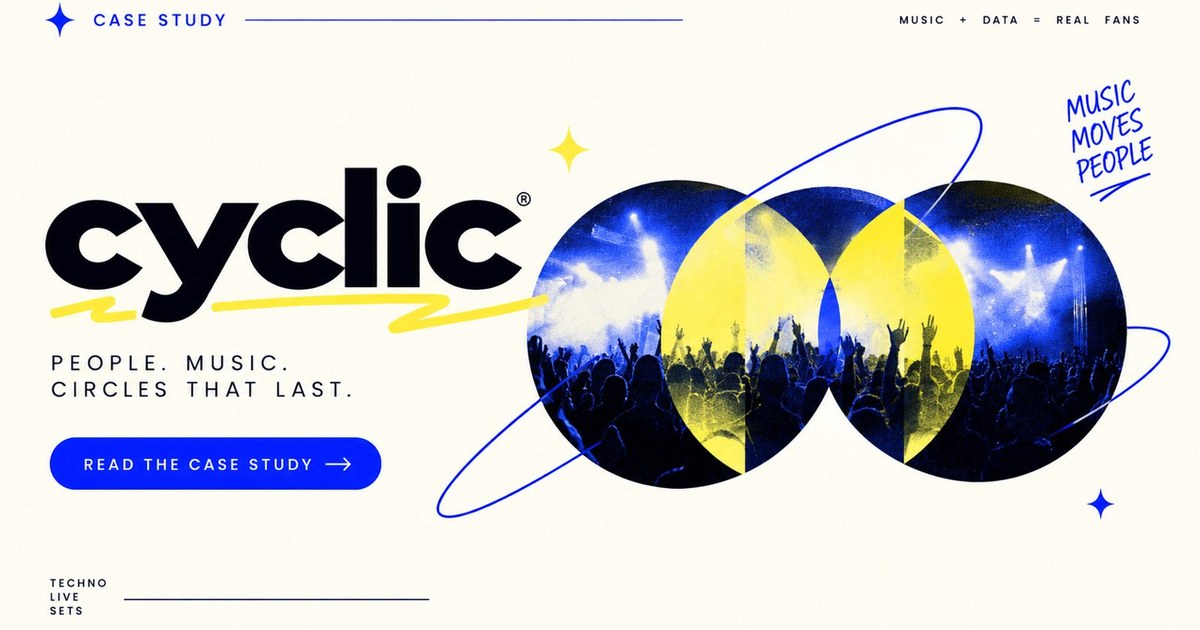
Our Cyclic case study documents 3,144 tracked purchases across ongoing event work. The important principle is continuity: learning from one campaign can inform the next without assuming every lineup or city will convert the same way.
Explore the Cyclic case study03 /
Platforms & audiences
One attendee journey. Different channels with different jobs.
Which advertising platform is best for selling event tickets?
There is no single best platform for every event. Meta can support discovery and eligible remarketing; Google can capture existing search intent; TikTok can introduce an event through platform-native video. The right mix depends on who can attend, what demand already exists, available creative and budget.
Media Buying Maxxing's event service considers Meta, TikTok, Google, Spotify, LinkedIn, Outbrain, X, Pinterest and Reddit. That is a toolkit, not a recommendation to buy all nine for every campaign.
See our platform approachShould I use Meta Ads or Google Ads for my event?
Use the audience's intent to decide. Meta can help people discover an event before they search for it; Google Search can reach people already looking for the event, artist or a relevant experience.
An unknown event may have little branded search demand at launch. A recognised artist may attract searches worth capturing. Test the role of each channel and judge the combination against ticket sales instead of asking both platforms to do the same job.
Are TikTok ads useful for event promotion?
TikTok can be useful when likely attendees use it and you have video that makes the event tangible. Artist footage, atmosphere, clear details and a credible reason to attend are stronger starting points than simply resizing a poster.
Do not equate video views with ticket purchases. Check whether the attention leads to relevant site visits and sales, and whether you have enough budget and measurement to learn from the test.
How do you target the right audience for a local event?
Start with the realistic attendance catchment: venue location, transport, travel willingness and whether the lineup can attract visitors from further away. Then test relevant audience signals and creative within that geography.
Avoid making audiences so narrow that delivery becomes expensive or learning stalls. Use city-level sales patterns and ticketing data to challenge assumptions rather than relying only on interest labels.
What is remarketing, and when does it help event ticket sales?
Remarketing reaches eligible people who have already interacted with your event, such as site visitors or engaged viewers, subject to platform rules and applicable consent requirements. It can remind interested attendees about the lineup, ticket availability or a genuine price-stage change.
Its scale depends on the audience you have built. A new event with little traffic cannot rely on remarketing alone. Exclude purchasers where feasible, watch frequency and do not invent urgency or scarcity.
Should the same event campaign run unchanged in different cities?
No. Reuse useful assets and measurement, but test the demand in each city. Artist familiarity, travel distance, venue, competition and buying pace can differ even when the lineup is identical.
Separate city-level budgets and reporting so you can see where sales are coming from. The Hot Since '82 case study is a useful example of reading two cities as distinct sales situations.
Compare the two-city campaign story04 /
Creative & the ticket journey
Give people a reason to attend. Then make buying straightforward.
What creative assets do event ads need?
Event ads need a clear offer and usable assets: artist or speaker material, approved event footage or imagery, location, timing, ticket price or stage and a direct path to buy. Use formats suited to each placement, including mobile-friendly video where appropriate.
Creative should answer the attendee's questions: what is happening, why attend, where is it and what do I do next? Confirm usage rights before distributing artist footage, music or third-party images.
How many ads should an event campaign run?
Run enough distinct ideas to learn, but not so many that the budget cannot support meaningful comparisons. Test different reasons to attend, formats and messages—not a large batch of nearly identical poster variations.
Add new creative when performance and audience response justify it. The right number depends on spend, audience size and campaign duration; there is no fixed ad count that guarantees results.
Read our guide to ad volume and timingWhy do people click event ads but not buy tickets?
The ad may attract curiosity without purchase intent, or the ticket page may introduce friction: unclear price, unexpected fees, missing venue information, slow mobile loading or a difficult checkout. Tracking errors can also make real sales appear missing.
Walk through the journey on a phone, including payment. Compare landing-page visits, checkout starts and purchases where measurable. Fix the point of friction instead of treating a low click cost as proof the campaign is working.
Can you advertise an event from a brand-new ad account?
Yes, but a new account has little campaign history and may need business setup, access checks and purchase measurement before useful optimization can begin. Build a test plan around the remaining time and budget rather than assuming mature-account performance immediately.
Our Hugel case study follows a brand-new advertising account over 35 days, from no history to measurable ticket purchases. It is a documented example, not a guaranteed timeline for a new organiser.
Read the Hugel standing-start case study05 /
Measurement & real results
Revenue first. Clear definitions. No victory fog.
Which metrics matter most for event advertising?
Start with ticket purchases, ticket revenue, cost per purchase and sales pace against the event's goal. Also check remaining capacity and the margin available to acquire each attendee.
Reach, frequency, click-through rate and checkout activity help explain what is happening. They should support decisions, not replace the ticket-sales outcome. State whether a purchase count represents orders or individual tickets before using it for planning.
What is a good ROAS for an event campaign?
A good return on ad spend depends on the event's economics. ROAS is attributed revenue divided by advertising spend; it is not profit and usually does not include management fees or production costs.
As an illustration, €3,000 in attributed ticket revenue from €1,000 in ads is 3× ROAS. Whether that is sustainable depends on ticket margins, fees, refunds and other costs. Define your own break-even target rather than borrowing a benchmark from a different event.
Our Lee Burridge case study reports 11.6× on show-day advertising after the earlier campaign had built the audience. A strong late-stage result is not a whole-campaign profitability guarantee.
See the Lee Burridge measurement contextHow do you track ticket purchases from ads?
Where the ticketing system allows it, configure purchase conversion events with value and currency, campaign tagging and analytics. Test that successful purchases are recorded correctly and that duplicate events are not counted as separate orders.
Third-party ticketing providers differ in the integrations and access they support. Confirm what is actually possible before launch and reconcile advertising reports with ticketing records. Do not present untracked sales as precisely attributable to a campaign.
Why do Meta, Google and ticketing reports show different sales numbers?
Platforms use different attribution windows and models, and may credit the same purchase to different ad interactions. Consent choices, cross-device journeys, missing tags and reporting delays can also create differences.
Do not simply add every platform's attributed purchases together. Keep ticketing records as the reference for total sales, explain the reporting windows and use platform attribution as a decision-making signal rather than a perfect causal account of every sale.
Do event advertising pixels and remarketing need cookie consent?
Non-essential advertising tracking generally requires appropriate consent before activation for visitors in Romania and the EU. Use clear choices, respect withdrawal and only use customer lists or audience data that you are entitled to use.
Google's consent mode includes ad_user_data for sending user data for advertising and ad_personalization for personalized advertising. Your consent implementation needs to communicate the visitor's choices to the tools you actually use.
Server-side tracking is not a way to bypass consent. The implementation depends on the tools, data and jurisdictions involved; check it against your privacy notice and obtain legal advice for your specific obligations.
06 /
Working with Media Buying Maxxing
An expert in the account. You stay in control of the event.
Why work with Media Buying Maxxing for event advertising?
Media Buying Maxxing combines event-specific campaign work with Alex's media-buying discipline: purchase measurement, audience and creative testing, budget reallocation and decisions tied to revenue rather than impressions alone.
Our public case studies show how that approach responded to different event situations, including launch momentum, two-city demand and a recurring calendar. Read the details and their measurement context—not just the headline number—when deciding whether we are a fit.
Inspect the evidence in our case studiesWhat do you manage, and what does the organiser provide?
Our event service covers the media plan, platform mix, campaign setup, ticket-purchase measurement, optimization and reporting. You provide the event details, ticket goal, access to relevant accounts and ticketing journey, approved assets and a decision-maker for timely updates.
Creative production, ticketing changes and any additional deliverables should be confirmed in the agreed scope. Buying media is not the same as organising the event or replacing every part of its marketing.
Are your management fees included in the advertising budget?
No. Media spend goes to the advertising platforms, not to us. The Media Buying Maxxing fee calculator separates the service estimate from the monthly ad budget and shows the breakdown as you select the setup, involvement and platforms.
The estimate is a starting point for discussing the scope; services begin under an agreed proposal or contract. Use the live calculator for the current options instead of relying on a fixed price in an article.
Get an estimate in the fee calculatorDo I keep control of my advertising budget and accounts?
You keep control of your advertising budget and the event's decisions. We work with the access needed to run and measure the agreed campaigns, rather than treating your budget as an unexplained agency expense.
Confirm account ownership, access permissions, billing and the handover process in the agreed scope before work starts. Never share passwords when the platform offers role-based access.
What information do you need to plan my event campaign?
Bring the event format, location, timing, capacity, ticket prices, sales so far and remaining ticket target. Add your available ad budget, past campaign results, ticketing provider, approved assets and the state of your advertising and analytics setup.
These details help us assess what can realistically be achieved and what needs fixing first. Start with the fee calculator and tell us about the event so the follow-up is based on your actual situation.
Tell us about your eventThe answers have receipts.
Different events. Different buying patterns. See the decisions and the measurement behind the results.

Now, your event.
Tell us what you need to sell, what you have tried and how close you want us in the account.
Get your fee estimate